Beyond the Builder: Turning a Skill-Based Trade Business Into Something That Runs Without You
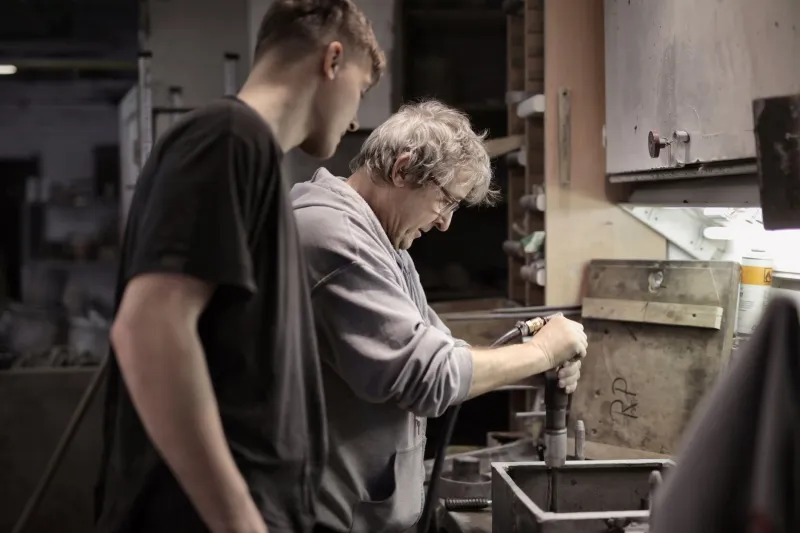
Ask most trade business owners what their exit plan looks like and you'll get one of two answers. Either a shrug, or something vague about "figuring it out when the time comes." It's not laziness. It's a trap that's almost built into how skilled trades work.
You built the business because you're good — really good — at what you do. Clients hire you specifically. They trust your eye, your hands, your judgment. And somewhere along the way, that became the whole business model. Which is great, until it isn't.
Because here's the hard truth: a business that can't function without its owner isn't really a business. It's a job with extra paperwork.
The Identity Problem Nobody Warns You About
Before we get into systems and documentation, let's talk about the thing that actually stops most tradespeople from building a sustainable business: identity.
If you've spent twenty years being the guy who does the best tile work in the county, the idea of stepping back feels like giving something up. Your craft is tied to your self-worth in ways that are real and valid. But that same identity can become the ceiling on your business's growth and longevity.
Succession planning — whether you're handing the business to a family member, a longtime employee, or eventually selling it — requires you to start thinking of yourself as the architect of a business rather than just its best worker. That's a genuine mindset shift, and it doesn't happen overnight. But it has to start somewhere.
The question to sit with is this: If I couldn't work for six months, what happens to my business? If the answer is "it falls apart," you have work to do.
Start With Documentation Before You Think You Need It
The most common mistake trade business owners make is waiting until they're ready to transition before they start documenting how things work. By then, it's often too late to do it well.
Documentation doesn't mean writing a boring operations manual that sits in a drawer. It means capturing how decisions get made in your business — the stuff that lives in your head that you've never had to explain because you've always just done it.
Here are the areas to start:
Estimating logic. How do you price a job? What factors do you weigh? What's your markup on materials? What's your minimum margin? Write it down. Build a template that someone else could use and arrive at something close to what you'd charge.
Quality standards. What does "done right" actually look like in your trade? What are the checkpoints you mentally run through before you call a job complete? These can often be turned into checklists that less experienced team members can follow.
Client communication. How do you handle a difficult client? What do you say when something goes wrong on a job? Your instincts here are years in the making — document the patterns.
Vendor relationships. Who do you call when you need materials fast? Who gives you the best pricing? Who to avoid? This institutional knowledge has real dollar value and it disappears when you do.
The Knowledge Transfer Challenge in Skilled Trades
Here's what makes succession planning uniquely hard in the trades: a lot of what you know can't be written down. Knowing how a floor is going to behave based on how it sounds when you walk on it. Reading a wall and knowing where the problems are hiding. That kind of tacit knowledge is earned through repetition and failure, and it doesn't transfer through a document.
What you can do is create the conditions for someone else to earn it.
This means intentional mentorship — not just having someone work alongside you, but actively narrating your thinking. "Here's what I'm looking at. Here's what I'm worried about. Here's why I'm making this call instead of that one." It's slower. It's sometimes frustrating. But it's the only way real skill transfer happens.
Some trade business owners have started recording short videos on the job — a quick phone clip walking through a tricky install, explaining the decision-making in real time. Over a few years, that library becomes genuinely valuable training material.
Pricing for a Business You're Not Running Yourself
If your pricing model is built around your labor rate and your efficiency, it may not hold up once you're not the one doing the work. This is a structural issue worth addressing early.
When you bring on employees or eventually transition leadership, your margins need to absorb the inefficiency of people who aren't you. A job that takes you four hours might take a capable but less experienced employee six. Your pricing needs to account for that reality, or your business stops being profitable the moment you step back.
This is also where the business value of your brand becomes critical. If clients are paying a premium because they trust you specifically, that premium may not transfer. But if clients are paying a premium because they trust your company — your standards, your reputation, your systems — then the business has real transferable value.
Building toward that second scenario takes years, but it starts with decisions you make today.
What Succession Actually Looks Like in Practice
Succession doesn't have to mean retirement. It can mean stepping into a different role — estimating, client relationships, business development — while a trusted employee or partner handles the field work. A lot of trade business owners find this transition more satisfying than they expected. They're still in the business, still shaping its direction, just not doing it with their hands.
For those thinking further ahead — selling the business, passing it to a child, or bringing in a partner — start having those conversations earlier than feels necessary. A business that has clear systems, documented processes, trained staff, and a reputation not entirely dependent on one person is worth significantly more than one that doesn't.
The legacy you're building isn't just about the work you've done. It's about what keeps going after you're ready to step back. That's the real measure of a business worth building.